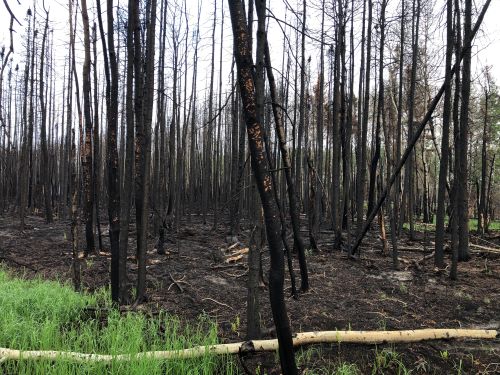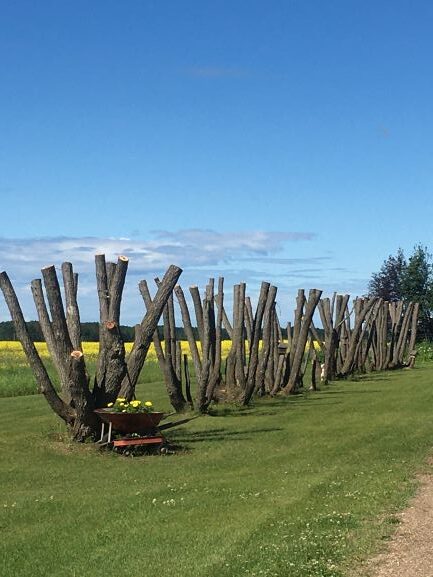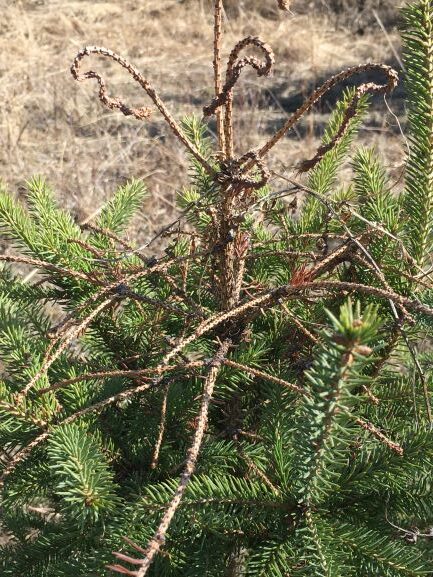

The forest tent caterpillar(Malacosoma disstria) is one of the most significant defoliating insects affecting broadleaf trees and forests across Canada. Periodic population outbreaks can result in extensive defoliation of natural aspen forest, and other hardwood trees in shelterbelts, windbreaks, urban settings and parks with noticeable impacts on tree health, aesthetics, and public perception of forest condition. Although outbreaks are cyclical and often short-lived, the cumulative effects of repeated defoliation can reduce growth, increase susceptibility to secondary pests and diseases, contribute to decline or due to tree mortality, it increases risk of forest fires.
Pest ID and Symptoms
Adult moths are tan to light brown with darker bands across the wings. They are short-lived and primarily active in early summer. Adults do not feed on foliage; their primary role is reproduction. Females deposit egg masses on host twigs shortly after mating, completing the annual life cycle. Eggs are laid in mid to late summer in compact, varnish-like bands encircling small twigs of host trees. Each mass contains several hundred eggs and is coated with a protective, glossy secretion that helps prevent desiccation and cold injury during winter.
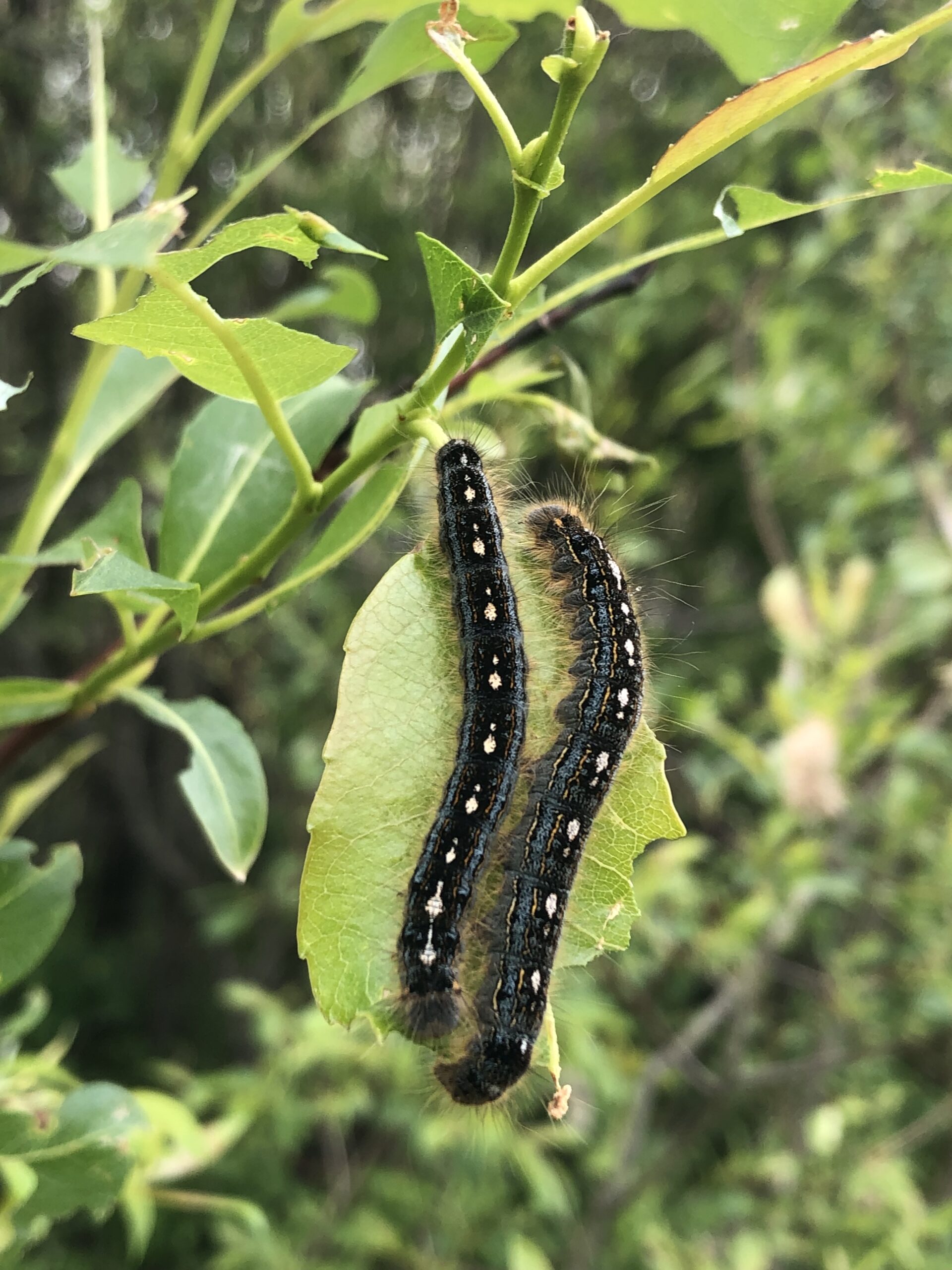
Larvae are the most conspicuous and damaging life stage. Newly hatched caterpillars are small and dark, becoming more distinctive as they mature. Full-grown larvae reach approximately 45–50 mm in length and display a characteristic pattern: a row of pale, footprint-shaped spots along the back, flanked by blue lateral lines and sparse body hairs. Unlike true tent caterpillars, forest tent caterpillars do not construct silk tents. Instead, they congregate in loose groups on trunks and branches during resting periods, often forming dark, moving bands as they travel to feeding sites. Larval defoliation progresses inwards and downwards in the crown. These mass movements of larvae can be highly visible on trees but also on roads, sidewalks, vehicles and railway lines.
The species completes one generation per year. Eggs overwinter on twigs and hatch in early spring, typically coinciding with bud break and leaf expansion of host trees. Larvae feed intensively for 4–6 weeks, passing through several developmental stages (instars). Peak defoliation usually occurs in late spring to early summer. Pupation follows, and adult moths emerge in early to mid-summer to mate and lay eggs. Population levels fluctuate cyclically, with outbreaks occurring every 8–12 years in many regions. Natural population collapses often follow outbreaks due to starvation, disease, virus, bacteria and increased predation.
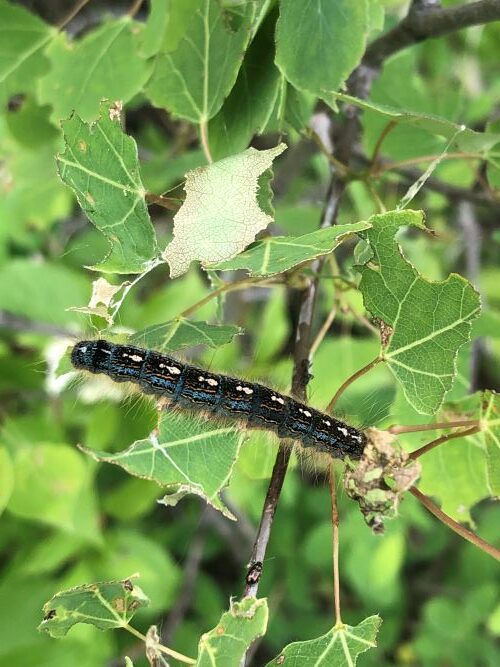
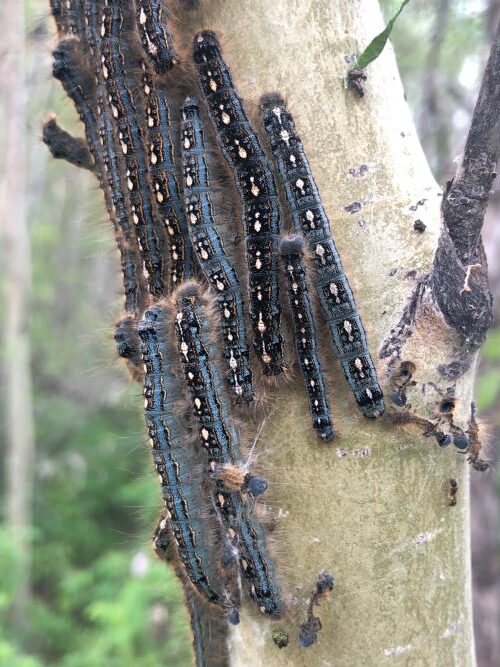
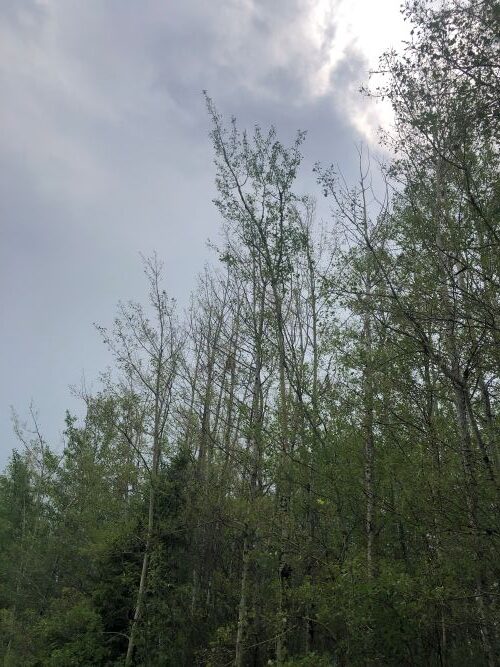
Damage
Forest tent caterpillar primarily feeds on broadleaf tree species. Aspen and other poplars are preferred hosts, but outbreaks frequently affect elm, fruit trees, oak, maple, birch, ash, and a variety of ornamental hardwoods in urban landscapes. During outbreak years, extensive areas(millions of hectares) of forest may experience from thinning crown to complete defoliation. Even heavily defoliated trees can recover after short outbreaks, and first-time defoliation is often followed by a second flush of leaves may appear by early summer if adequate soil moisture and stored energy reserves are available
However, repeated severe defoliation over consecutive years can reduce radial growth in species such as trembling aspen by 40–75%, often accompanied by crown thinning and twig dieback. Tree mortality becomes more likely when severe defoliation coincides with additional stressors, particularly drought.
Large numbers of caterpillars can become a significant public nuisance. Mass movement of larvae across roads, railways, sidewalks, building walls, vehicles, and outdoor furnishings can create slippery hazard conditions and other public complaints.
Management and Control
Effective management on trees involves an integrated approach, combining cultural, biological, and maybe some chemical control methods:
- Cold wet and late frost kills many larvae in spring. Extremely cold winter destroy many eggs.
- The biological insecticide Bacillus thuringiensis var. kurstaki (Btk) can be applied to foliage, which is effective when caterpillars are young
- In high-value ornamental plantings and around homes, where practical, manual removal of egg bands and resting larval groups is recommended
- The tachinid fly (Sarcophaga aldrichi) is a particularly effective natural enemy that reduces larval populations.
- In large shelterbelts, larval populations can be managed with registered insecticides, including malathion, acephate, carbaryl, deltamethrin, or biological products such as (Bacillus thuringiensis var. kurstaki). Malathion, deltamethrin, and Btk are approved for aerial application in some jurisdictions.
- Pesticide treatments are most effective when applied in late May to early June, targeting early larval stages before significant defoliation occurs. However, pesticides can be harmful to people, wildlife, fish, and beneficial insects. Use only registered products when necessary and strictly follow all label directions and safety precautions
- Disease, viral and bacterial outbreaks can also contribute to rapid population collapse.
- Natural enemies including parasitic wasps, predatory insects, and birds, contribute to population regulation